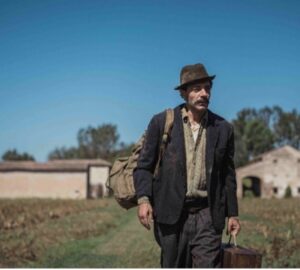


Abdellatif Kechiche con Mektoub, My Love. Canto Due alla 78° edizione del Locarno Film Festival
L’amore con la A maiuscola è una trappola per ingenui. Prima c’è il desiderio e poi la sazietà
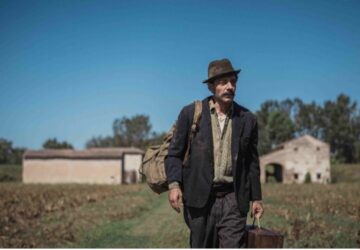
Con queste sagaci e salienti parole, citazione del film nel film, (d’epoca in bianco e nero), visto in tv dal nuovo protagonista, lo sceneggiatore autore (eccelso Shaïn Boumedine) del film di Abdellatif Kechiche, propelle verso lo sviluppo del nuovo capitolo, il secondo quasi terzo di Mektoub, My Love’,Canto Due.
Che, finalmente, pare vedere la fine del tunnel e, di conseguenza, si spera la luce in sala.

Tratto dal romanzo La Blessure, la vraie di François Bégaudeau, la terza saga della intricata vicenda produttiva che da Cannes 2017, le proteste giornalistiche, abbandoni di sala, i cunnilingus di 15 minuti, la riscrittura, la causa legale, lo scioglimento della società di produzione, la riscrittura, la lite coi produttori, i tagli e il ri-montaggio, pare abbia finalmente trovato un felice incontrastato esito finale.
E pensare che è il cinema a prendere spunto dalla vita!
Ma, nel pensiero e nelle azioni del tunisino più intrigante del mondo, è vero anche il contrario. E soprattutto si pensa alla purezza, innocenza dell’idea, non per forza di cose votata aprioristicamente allo scandalo.
Infatti nella sinossi rivisitata tutto ora entra nel posto giusto. Inclusa la diatriba perenne Hollywood /Cinema d’Autore, libertà espressiva e purezza di scrittori. Versus malizia del mercato, del commercio e di chi produce cinema. Spesso non sempre gente di primo pelo.
Oltre alle perenni violenze degli inutili cambi di titoli, specie in Italia, ai tagli, concetti rivisti a tal punto che spesso snaturano completamente un’opera d’arte e la sua concezione. Alla faccia di registi e attori!
Oltre a questo gesto di arroganza economica verso cultura, idee e purezze di creazione, c’è molto, tanto di più nelle due ore e mezza in visione. Si parla anche di amore e delle valenze tributarie che spesso lo accompagnano.
Amore e profitto. E amore e gioventù. Amore e lavoro. Ovvero opportunismo.
La triade incuriosisce ed è esplorata perfettamente con gioia, ilarità e profondità dall’ ‘irregolare’, sorprendente regista che, nel giovane protagonista rivede se stesso.
Ma il film oltre che romantico, sa essere anche riflessione sociale genotipica de le Monde arabe in Francia. Studio sociologico delle splendide diversità, ma anche e soprattuto sa divenire un film politico. Per chi vuole coglierlo.
Si esplora anche a volo d’uccello l’eterno conflitto, Occidente che sfrutta, ‘stupra’ l’Oriente (Usa Vs Mondo Arabo) e che non è nemmeno lontanamente consapevole della sua pochezza e insensatezza, mediata da un vuoto cosmico interiore. Per cui poi è spinto a fare guerre!
Il film ricorda un pò The Brutalist, già Leone d’Argento a Venezia81.
Si racconta qui, in modo più ironico, ma non meno consapevole ed efficace, la diatriba tra committente e autore o creatività.
L’inverecondia dei primi che spesso contribuiscono con la loro superficiale tracotanza a produrre remake flop e vuoti, di chi produce bellezza pura e sentimento. Pare essere la storia vera di Abdellatif Kechiche, boicottato, autosabotato, strumentalizzato o sfruttato?
Ai posteri l’Ardua sentenza.
Il cast
Shaïn Boumedine, Ophélie Bau, Jessica Pennington, Salim Kechiouche, Andre Jacobs, Hafsia Herzi, Alexia Chardard, Dany Martial, Marie Bernard, Delinda Kechiche, Lou Luttiau, Kamel Saadi, Athénaïs Sifaoui tutti in forma smagliante e stato di grazia senza ego, in ascolto l’uno dell’altro.
Il cast tutto è energeticamente, visivamente perfetto, funzionante, ottimo ben diretto, sfondando quel muro che separa da se lo spettatore. Siamo dentro anche noi in questa bella famiglia araba, multietnica e ristoratrice, colta e seria, equilibrata e divertente.
Tutti adorabili, belli e centrati ci nutrono, non solo di cous cous, ma anche di sogni.
Non così i due americani, attrice (Jessica Pennington) e marito produttore (impassibilmente preciso Andre Jacobs) che nel loro squilibrio producono danni, innanzitutto a se stessi. Poi secondariamente a chi li crede e chi li vive. Eccelsi comunque sia nel ruolo che nell’interpretazione.
Ad hoc Shaïn Boumedine e Ophélie Bau. Iconica nel ruolo, libera e stordita, Jessica Pennington, sublime.
Ottima anche la fotografia e l’Italian touch di Marco Graziaplena, e di cui il film è ricco, oltre alla scelta musicale e i suoni. Anche la produzione di Riccardo Marchegiani e le scene di Marcello Dicarlo con scorci naturalistici siciliani, francesi a Sète e spagnoli. Insomma pienamente mediterranei..
Tutto è ora perfetto nella pellicola che diviene godibile, profonda e densa metafora dei conflitti odierni che dal piccolo, dal familiare, arrivano poi a generare guerre fratricide.
L’intelligenza di questo regista si fonda sugli stereotipi che egli ama scardinare e corroborare al tempo stesso, lasciando chi guarda più ebete di quanto già si sentisse prima.
Ma di, sicuro, più divertito.
Sinossi
Amin (perfetto Shaïn Boumedine) torna a Sète dopo gli studi a Parigi, ancora con il sogno di fare cinema e con una sceneggiatura pronta. Per caso, un produttore americano in vacanza si interessa al suo progetto, dal profondo e interessante titolo: Gli elementi essenziali dell’esistenza universale. Vuole che sua moglie Jess sia la protagonista. Ma il destino capriccioso impone le sue regole.
Chi è il regista tunisino e francese che è anche sceneggiatore, attore?
Abdellatif Kechiche dallo stile naturalistico colpisce e scatena neuroni di tutti con i suoi film dai forti accenti sociali, denuncia delle disfunzionali e assai comiche relazioni umane.
Filmografia
2019 Mektoub, My Love: Intermezzo
2017 Mektoub, My Love: Canto Uno
2013 Blue Is the Warmest Colour (La Vie d’Adèle – Chapitres 1 & 2)
2010 Black Venus (Vénus noire)
2007 The Secret of the Grain (La Graine et le Mulet)
2003 Games of Love and Chance (L’Esquive)
2000 Blame It on Voltaire (La Faute à Voltaire)
To read more on Music, Cinema, Tv, Theatre and Art from Gaia Serena Simionati
Copyright © 2025 Gaia Serena Simionati, All rights reserved
English version
Kechiche. “Mektoub, My Love Canto Due”. Awareness, art, society and cinema
by Gaia Serena Simionati
Abdellatif Kechiche with Mektoub, My Love. Canto Due at the 78th edition of the Locarno Film Festival
Love with a capital L is a trap for the naive. First there is desire, then satiety.
With these shrewd and salient words, a quote from the film within the film (a black and white period piece) seen on TV by the new protagonist, the screenwriter (the sublime Shaïn Boumedine) of Abdellatif Kechiche’s film propels us towards the development of the new chapter, the second, almost third, of Mektoub, My Love, Canto Due.
Which, finally, seems to see the end of the tunnel and, consequently, hopefully the light in the theatre.
The third saga of the intricate production story that began at Cannes 2017, with journalistic protests, walkouts, 15 minutes of cunnilingus, rewrites, lawsuits, the dissolution of the production company, rewrites, disputes with producers, cuts and re-editing, seems to have finally found a happy and undisputed ending.
And to think that cinema takes its inspiration from life!
But, in the thoughts and actions of the world’s most intriguing Tunisian, the opposite is also true. Above all, one thinks of the purity and innocence of the idea, which is not necessarily doomed to scandal from the outset.
In fact, in the revised synopsis, everything now falls into place. Including the perennial Hollywood/arthouse cinema debate, freedom of expression and the purity of writers.
Versus the malice of the market, commerce and those who produce cinema. Often not always greenhorns.
In addition to the constant violence of unnecessary title changes, especially in Italy, where cuts are made, concepts are revised to such an extent that they often completely distort a work of art and its conception. So much for directors and actors!
In addition to this gesture of economic arrogance towards culture, ideas and the purity of creation, there is much, much more in the two and a half hours of viewing. It also talks about love and the tax implications that often accompany it.
Love and profit. And love and youth. Love and work. Or rather, opportunism.
The triad intrigues and is explored perfectly with joy, hilarity and depth by the “irregular”, surprising director who sees himself in the young protagonist.
But the film, as well as being romantic, also manages to be a social reflection on the Arab world in France, a sociological study of splendid diversity, but also and above all, it manages to become a political film, for those who want to grasp it.
It also explores, from a bird’s eye view, the eternal conflict between the West, which exploits and “rapes” the East (the USA vs. the Arab world) and is not even remotely aware of its pettiness and senselessness, mediated by a cosmic inner void. This is why it is driven to wage war!
But the film is somewhat reminiscent of The Brutalist, which won the Silver Lion at Venice81.
It recounts, in a more ironic but no less conscious and effective way, the dispute between client and author or creativity.
And the shamelessness of the former, who often contribute with their superficial arrogance to producing empty, flop remakes of those who produce pure beauty and emotion. Is this the true story of Abdellatif Kechiche, boycotted, self-sabotaged, exploited or manipulated?
Posterity will be the judge.
The cast
Shaïn Boumedine, Ophélie Bau, Jessica Pennington, Salim Kechiouche, Andre Jacobs, Hafsia Herzi, Alexia Chardard, Dany Martial, Marie Bernard, Delinda Kechiche, Lou Luttiau, Kamel Saadi, Athénaïs Sifaoui are all in great shape and a state of grace without ego, listening to each other.
The entire cast is energetically and visually perfect, functional, excellently directed, breaking down the wall that separates them from the viewer. We too are part of this beautiful Arab family, multi-ethnic and restorative, cultured and serious, balanced and fun.
All adorable, beautiful and centred, they nourish us, not only with couscous, but also with dreams.
Not so the two Americans, actress (Jessica Pennington) and producer husband (impassively precise Andre Jacobs), who in their imbalance cause damage, first and foremost to themselves. Then secondarily to those who believe in them and those who live with them. Excellent nonetheless in both role and performance.
Shaïn Boumedine and Ophélie Bau are perfect for their roles. Jessica Pennington is iconic in her role, free and dazed, sublime.
L’italian touch
The photography and Italian touch of Marco Graziaplena are also excellent, and the film is rich in this, as well as in its choice of music and sounds. The production by Riccardo Marchegiani and the scenes by Dicarlo with naturalistic Sicilian, French and Spanish views are also excellent. In short, fully Mediterranean.
Everything is now perfect in the film, which becomes enjoyable, profound and a dense metaphor for today’s conflicts, which start small, within the family, and then generate fratricidal wars.
The intelligence of this director is based on the stereotypes that he loves to dismantle and corroborate at the same time, leaving the viewer more dumbfounded than they already felt before.
But certainly more entertained.
Synopsis
Amin (played perfectly by Shaïn Boumedine) returns to Sète after studying in Paris, still dreaming of making films and with a screenplay ready. As a result, by chance, an American producer on holiday takes an interest in his project, with its profound and intriguing title: The Essential Elements of Universal Existence. He wants his wife Jess to play the lead role. But capricious fate imposes its own rules.
Who is the Tunisian-French director who is also a screenwriter and actor?
Abdellatif Kechiche, with his naturalistic style, strikes a chord and stimulates everyone’s neurons with his films with strong social overtones, denouncing so dysfunctional and highly comical human relationships.
Filmography
2019 Mektoub, My Love: Intermezzo
2017 Mektoub, My Love: Canto Uno
2013 Blue Is the Warmest Colour (La Vie d’Adèle – Chapitres 1 & 2)
2010 Black Venus (Vénus noire)
2007 The Secret of the Grain (La Graine et le Mulet)
2003 Games of Love and Chance (L’Esquive)
2000 Blame It on Voltaire (La Faute à Voltaire)
To read more on Music, Cinema, TV, Theatre and Art from Gaia Serena Simionati
Copyright © 2025 Gaia Serena Simionati, All rights reserved