

«Il fatto che mio nonno fosse un “Secret Listener” è rimasto un segreto che si è portato nella tomba.
Rcconta Helen Lederer, amministratrice di Trent Park, scrittrice e comica, il cui nonno fu un “Secret Listener”
A Trent Park House era possibile registrare fino a 7 minuti di conversazione alla volta.
Furono intercettate circa 3.000 conversazioni di prigionieri di guerra tedeschi.
Detenuti 59 generali tedeschi, insieme a molti altri ufficiali di alto rango.
100 rifugiati ebrei di lingua tedesca in servizio nel Corpo dei Pionieri dell’esercito britannico furono reclutati come «ascoltatori segreti»
Con queste basi interessanti Trent Park, la storica casa di campagna a Enfield, nel nord di Londra, svelerà la sua storia nascosta.
La dimora signorile è stata infatti testimone di alcuni degli eventi più cruciali del XX secolo. Questa straordinaria storia di spionaggio, coraggio e inganno creativo è rimasta in gran parte sconosciuta per oltre 70 anni.
Conosciuta come la «Casa dei Segreti», Trent Park House è una delle dimore storiche più affascinanti di Londra. Finalmente quest’estate tutti potranno conoscerla perché aprirà al pubblico per la prima volta come museo.
Le sale di Trent Park House soono state recentemente restaurate.
Esse illustrano il ruolo centrale che la dimora ha svolto nella battaglia dei servizi segreti britannici. Opposti alla Germania tra il 1939 fino alla fine della Seconda Guerra Mondiale.
Ex residenza di Sir Philip Sassoon, «il più grande padrone di casa della Gran Bretagna», la dimora sorge nel cuore del Trent Country Park. E’ un parco di 413 acri situato a Enfield, nella zona nord di Londra, raggiungibile con la linea Piccadilly.
Per la prima volta dal 1939, gli arredi e le opere d’arte un tempo appartenuti a Sir Philip Sassoon torneranno nella dimora e saranno esposti nella loro collocazione originale.
Storia di Trent Park House
La storia di Trent Park House a Enfield, nel nord di Londra, ha inizio quando Giorgio III concesse al proprio medico il diritto di affitto su una tenuta reale. Con un parco progettato da Humphry Repton, la dimora originaria passò alla famiglia Bevan, che la trasformò in una residenza vittoriana.
La casa fu acquistata da Sir Edward Sassoon, il cui figlio Philip ne ereditò la proprietà nel 1912. Philip Sassoon possedeva anche una maestosa residenza a Park Lane e un rifugio esotico creato appositamente per lui a Port Lympne, nel Kent.
Dopo la prima guerra mondiale, Philip Sassoon incaricò Philip Tilden di ristrutturare Trent Park sul modello di una casa di campagna georgiana di primo periodo, utilizzando mattoni provenienti dalla demolizione della Devonshire House a Piccadilly ed elementi architettonici di recupero. L’amico artista di Sassoon, Rex Whistler, aggiunse decorazioni in tutta la casa. La tenuta acquisì un campo da golf e una pista di atterraggio e Trent Park divenne una delle dimore più alla moda degli anni ’30, con Edoardo VIII, Winston Churchill, politici, artisti e scrittori come ospiti abituali.
Philip Sassoon morì di influenza nel giugno 1939. La sua fortuna e gran parte della sua collezione d’arte passarono a sua sorella, Sybil, che aveva sposato il marchese di Cholmondeley, proprietario di Houghton Hall nel Norfolk. Suo nipote, l’attuale marchese di Cholmondeley, è co-presidente del Trent Park Museum Trust.
Allo scoppio della guerra nel settembre 1939, Trent Park fu requisito dal governo. Divenne una struttura destinata alla detenzione di prigionieri di guerra tedeschi di alto rango, più di un centinaio dei quali passarono per quella casa. La casa fu segretamente dotata di dispositivi di ascolto per poter registrare le conversazioni private dei prigionieri. I generali tedeschi vivevano a Trent Park in un ambiente insolitamente confortevole, ignari del fatto che le loro conversazioni fornissero informazioni di intelligence fondamentali.
A Trent Park erano di stanza circa un centinaio di “ascoltatori segreti”, molti dei quali erano rifugiati ebrei di lingua tedesca reclutati nel Pioneer Corps. Erano in grado di seguire il linguaggio tecnico e gli accenti regionali che sentivano.
Dopo la guerra la casa divenne un istituto di formazione per insegnanti e alla fine entrò a far parte della Middlesex University. L’università lasciò Trent Park nel 2012 e, dopo un periodo di abbandono, la casa fu acquistata nel 2017 dal Berkeley Group.
Si concordò che le sale di rappresentanza della casa e il seminterrato sottostante sarebbero stati restaurati per ospitare un museo.
LONDON’S NEW MUSEUM TO REVEAL SECRETS OF ESPIONAGE AND INTRIGUE IN WARTIME BRITAIN
Known as the ‘House of Secrets’ Trent Park House is one of London’s most colorful historic houses. It will open to the public as a museum for the first time this Summer.
Newly restored rooms at Trent Park House chart the central role the House played in Britain’s intelligence battle with Germany between 1939 and the end of World War II.
Former residence of Sir Philip Sassoon, ‘the greatest host in Britain’, the House is at the heart of 413-acre Trent Country Park in Enfield, North London, accessible via the Piccadilly Line.
For the first time since 1939, furnishings and artworks once belonging to Sir Philip Sassoon will return to the House and be displayed in their original setting.
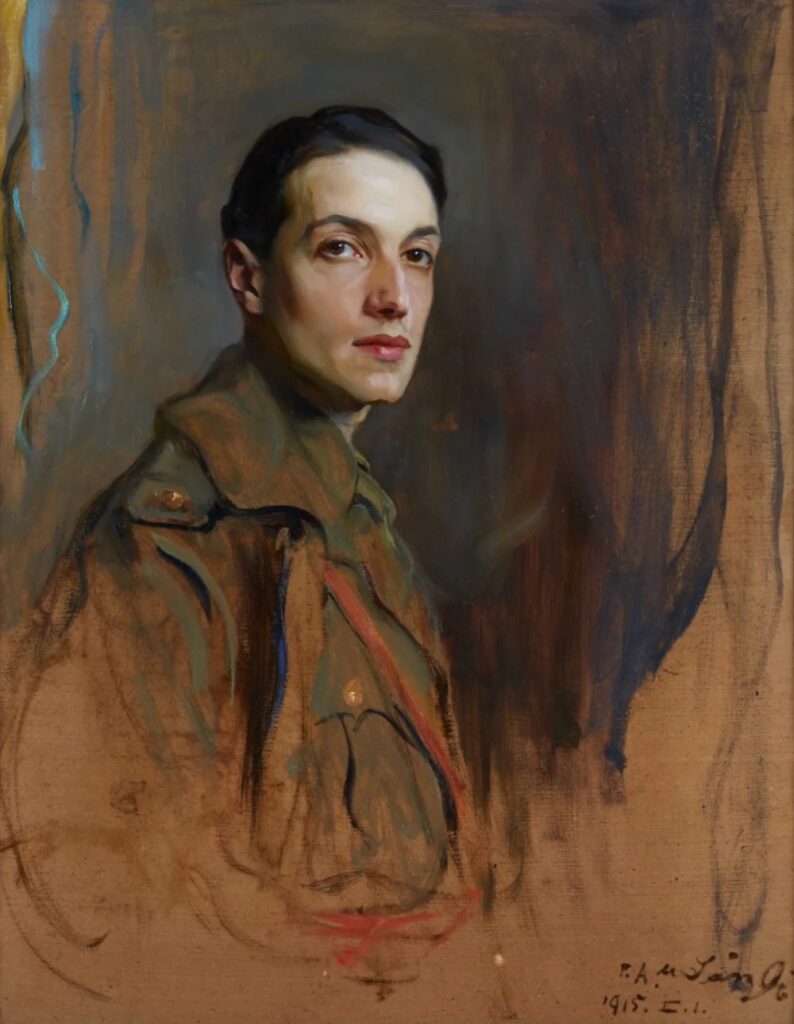
Philip de László, Portrait of Sir Philip Sassoon, aged 28, 1915.
Trent Park, the historic country house in Enfield, North London, will reveal its hidden history in Summer 2026. The stately home witnessed some of the most pivotal events of the 20th century, and this extraordinary story of espionage, courage and creative deception has remained largely untold for over 70 years.
Between 1939 and the end of the Second World War, Trent played a key role in Britain’s intelligence battle with Germany and is comparable in importance to Bletchley Park. Senior German officers, including 59 generals, were held captive in luxurious surroundings, treated with unusual privileges but unaware that their conversations were being recorded. Vital information was obtained by a complex network of miniaturised bugging devices hidden in every corner – in walls and skirtings, light fittings, plant pots, window ledges, the billiard table, and even the garden benches.
Beneath the state rooms, teams of ‘Secret Listeners’, many of whom were German-speaking Jewish refugees, worked in concealed basement rooms, recording conversations between the captured officers and producing intelligence that gave the Allies a crucial advantage in the intelligence war against Germany.
Before 1939, Trent Park had been one of the great country houses of the interwar years. In the 1920s the existing Victorian structure was remodelled to the taste of Sir Philip Sassoon of the Sassoon banking family, one of the wealthiest men in England. A lifelong bachelor, Sassoon was a close friend of the future Edward VIII and of Winston Churchill and served as an MP and as Under-Secretary of State for Air. Political friends, including members of the Royal Family, were entertained at weekends where they mixed with artists and entertainers such as Rex Whistler, George Bernard Shaw, Noel Coward, T. E. Lawrence (‘Lawrence of Arabia’), Charlie Chaplin and Fred Astaire.
Sassoon died in 1939 and the house was requisitioned by the government as a centre for intelligence operations — its glamorous interwar life giving way to its secret wartime purpose.
When the museum opens in Summer 2026, the two strands of Trent Park’s history will be brought together as an immersive visitor experience. The state rooms on the ground floor have been restored to their 1930s appearance, while beneath them in the basement the listening stations, offices and working rooms of the Secret Listeners will be shown in operation. The museum will present the contrasting stories of peacetime opulence and wartime intelligence.
Using original transcripts of recorded conversations, the museum has developed a learning and engagement programme for visitors, community groups and schools, funded by The National Lottery Heritage Fund. The programme will link to the Second World War strand of the national curriculum and provide an immersive on-site experience that brings to life the extraordinary history of this once little-known operation.
Dr Giuseppe Albano MBE, Director, Trent Park House of Secrets, said: “For decades the story of Trent Park has been hidden in plain sight. Many people were aware that something unusual had happened here during the war, but its full significance only became clear much later, and that is what makes it such a compelling place to explore today. We are opening the house with many secrets to share, and there will be more to discover in the years ahead as the story of Trent Park continues to unfold.”
“The fact that my grandfather was a Secret Listener was a secret he took to the grave.
Trent Park Trustee Helen Lederer, writer and comedian, whose grandfather was a Secret Listener, said:
It means so much that this chapter of little-known history can be told through the museum. To imagine what the Secret Listeners may have felt as they listened to the captive generals upstairs is as important as it is humbling.”
The Secret Listener Story in numbers.
Up to 7 minutes of conversation could be recorded at any one time.
Around 3,000 German POW conversations were bugged.
59 German generals held along with many other senior officers.
Around 100 German-speaking Jewish refugees serving in the British army’s Pioneer Corps were recruited as Secret Listeners
To read more on Music, Cinema, Tv, Theatre and Art from Gaia Serena Simionati
Copyright © 2025 Gaia Serena Simionati, All rights reserved
COVER PHOTO Rendering of the restored Trent Park House, Photo: Berkeley Homes;
History of Trent Park House
The story of Trent Park House in Enfield, North London, begins when George III granted his doctor the lease on a royal estate. With a landscape modelled by Humphry Repton, the original house, passed to the Bevan family, who remodelled it into a Victorian mansion.
The house was bought by Sir Edward Sassoon, whose son Philip inherited it in 1912. Philip Sassoon also owned a grand townhouse in Park Lane and an exotic retreat created for him at Port Lympne in Kent.
After World War I Philip Sassoon employed Philip Tilden to remodel Trent Park on the lines of an early Georgian country house. Using bricks from the demolished Devonshire House in Piccadilly and reclaimed architectural features. Sassoon’s artist friend Rex Whistler added decorations throughout the house. The estate acquired a golf course and an airstrip and Trent Park became one of the most fashionable houses of the 1930s. Regular guests were Edward VIII, Winston Churchill, politicians, artists and writers.
Philip Sassoon died of influenza in June 1939. His fortune and much of his art collection passed to his sister, Sybil. Sghe then who had married the Marquess of Cholmondeley, owners of Houghton Hall in Norfolk. Her grandson, the present Marquess of Cholmondeley, is co-chairman of the Trent Park Museum Trust.
At the outbreak of war in September 1939, Trent Park was requisitioned by the government. It became a site used for holding high-ranking German prisoners of war, more than one hundred of whom passed through the house. The house was secretly fitted with listening devices so that prisoners’ private conversations could be recorded. German generals lived in unusually comfortable surroundings at Trent Park, unaware that their conversations were providing vital intelligence.
Around one hundred Secret Listeners, many of whom were German-speaking Jewish refugees recruited into the Pioneer Corps, were stationed at Trent Park. They were able to follow the technical language and regional accents they heard.
After the war the house became a teacher training college, and eventually part of Middlesex University. The university vacated Trent Park in 2012, and after a period of dereliction the house was acquired in 2017 by the Berkeley Group.
It was agreed that the state rooms of the house and the basement below, would be restored as a museum.
Trent Park Museum Trust
Following a campaign to secure public access to the house, the Trent Park Museum Trust was formed in 2016. Under the co-chairmanship of the Marquess of Cholmondeley and founding Trustee Jason Charalambous has overseen the restoration of the 1930s state rooms. So the creation of the museum in the basement, telling the story of the Secret Listeners.
Helen Lederer is the granddaughter of Ernst Lederer, who served as a Secret Listener at Trent Park during the Second World War. She is a writer, actress and comedian.
Dr Giuseppe Albano MBE, Director, Trent Park House of Secrets
Giuseppe Albano has 15 years’ experience running museums and cultural heritage sites in the UK and Italy. Appointed Director of Trent Park House of Secrets in 2025, he is leading the development of the museum ahead of its opening in 2026.
Supporters include the Al Thani Collection Foundation. The National Heritage Lottery Fund, Clore Duffield Foundation, Rothschild Foundation. And Foyle Foundation, The Wolfson Foundation, Pennycress Trust, Garfield Weston Foundation, Sybil Charitable Trust. Then Historic Houses Foundation, Pilgrim Trust, Reuben Foundation, Architectural Heritage Fund, Monument Trust and HM Sassoon Charitable Trust.