
STEFANO MAINETTI – by Lisa Bernardini
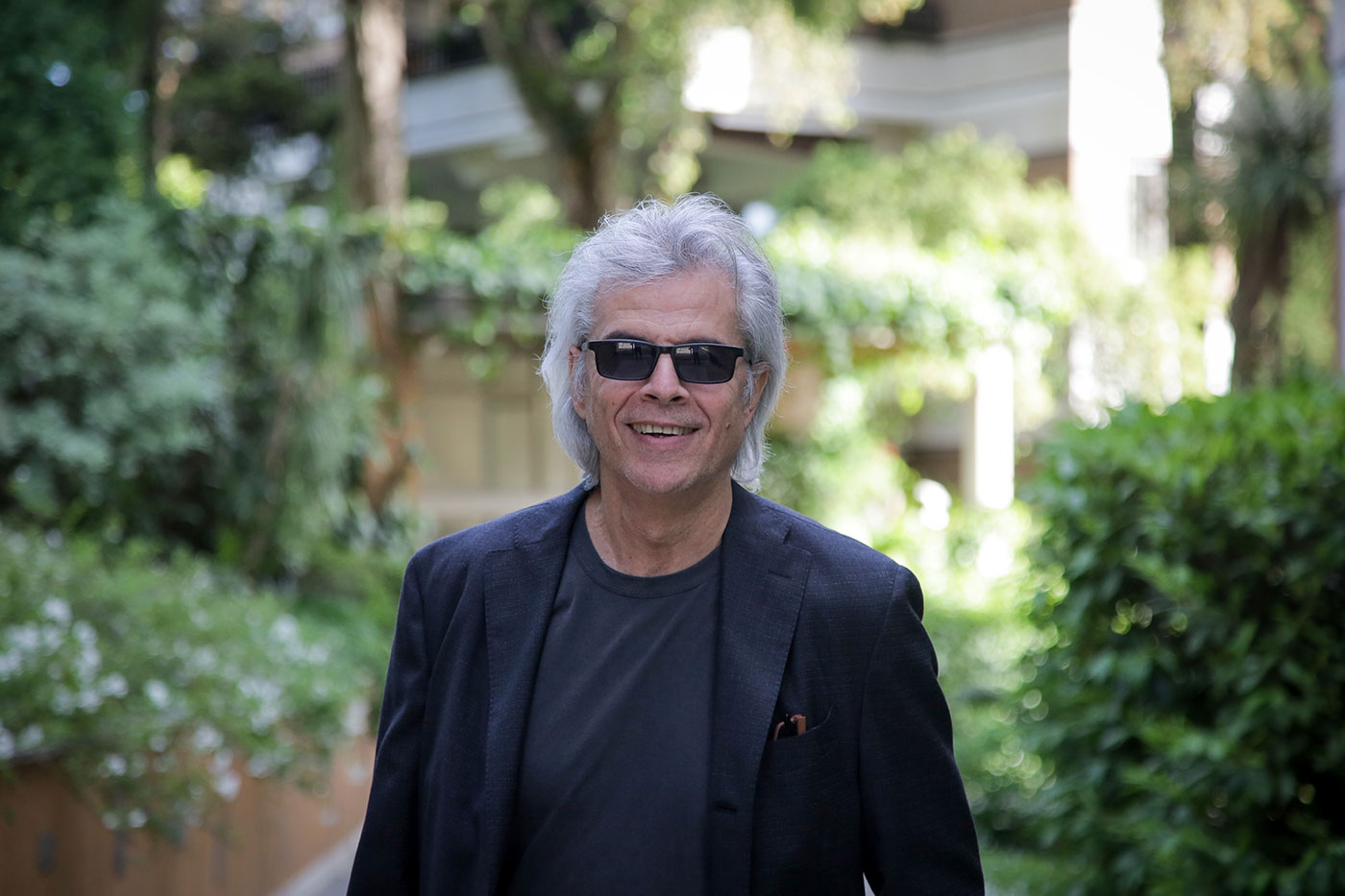
Stefano Mainetti, born in 1957, is one of the most interesting and talented composers and conductors of the contemporary music scene. Accurate studies (a curiosity: a pupil of Giorgio Caproni at the dawn of school education) and a long international experience have led him this year to become by title and merits also Professor of the Chair of Composition for Music Applied to Images at the Conservatory of Santa Cecilia di Rome. With numerous awards and an untiring work on the field between cinema, TV, theater, Stefano Mainetti should be remembered as the author of Rendering Revolution, a project presented at the MAXXI – National Museum of the Arts of the XXI century a few years ago and of which all the mass media: an experience of “musica aumentata” designed to engage the viewer on a multisensory level, where the fusion of different art forms (music, dance, painting and video art) contributes to producing an augmented reality result greater than the sum of its parts. The project, presented by the Accademia Nazionale di Santa Cecilia, took two years of preparation and received the honorable mention for the scientific and artistic value from the Conservatorio di Santa Cecilia. Waiting to resume some theatrical productions he was working on before the coronavirus emergency (the Petruzzelli of Bari as well as the Pergola of Florence had to follow the directives and as everyone is waiting to know when they will resume), on the world of Art in age of social distancing Maestro Mainetti has his own precise idea.
by Lisa Bernardini
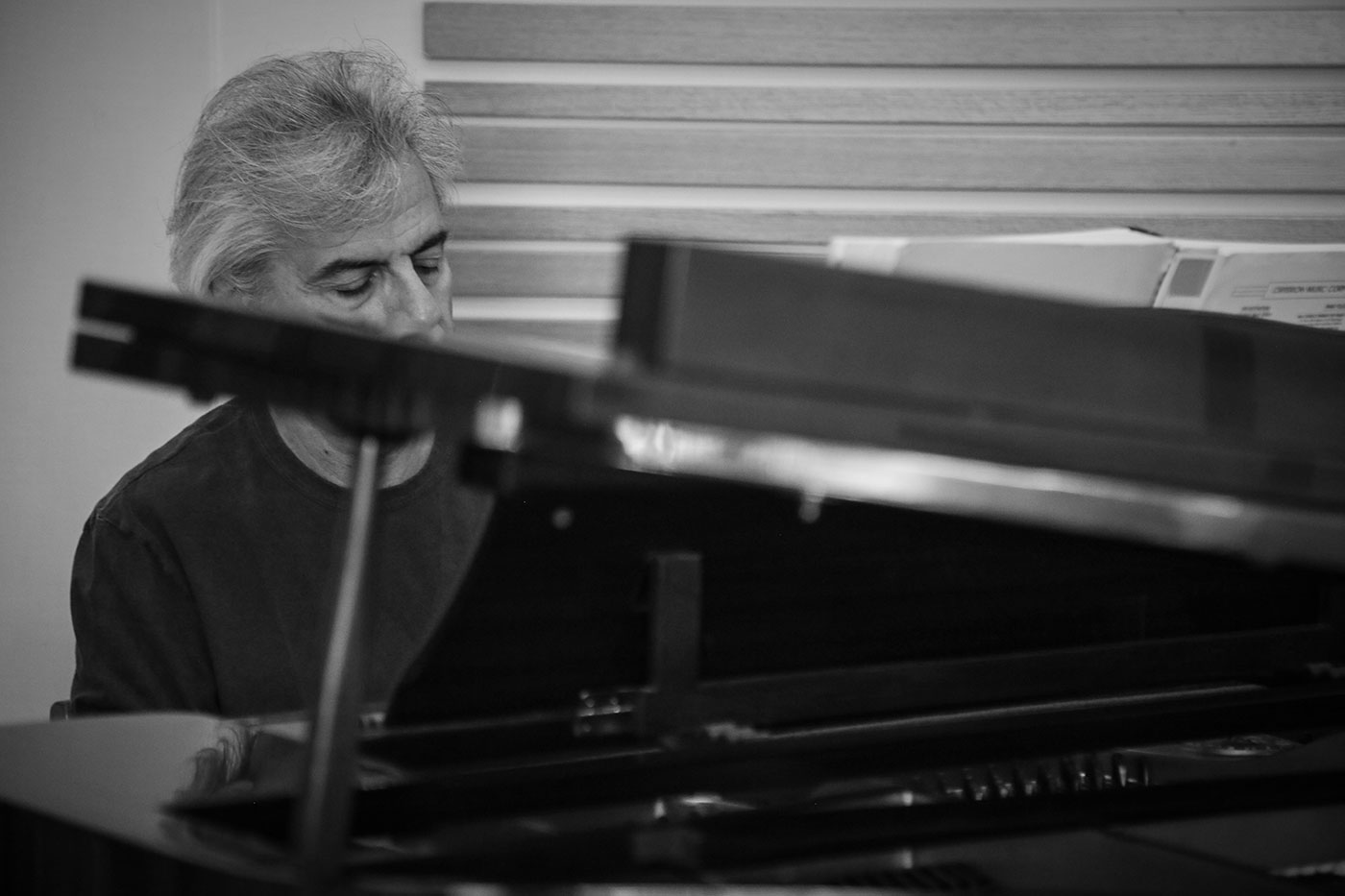
Maestro, the Art, the Culture and the Show in what conditions were they experiencing before the health emergency we are experiencing?
Already in precarious conditions. In these sectors, Italy invests little, especially compared to some European countries such as France which employs about double the resources in the same fields. We are incredibly last, slightly better than Greece. It makes one think that the cradles of Greek and Latin cultures are the tail lights today. Specifically, music is made even worse; the problem generates from the basic school, where little and bad is taught. The dedicated hour, with all due exceptions, is considered on a par with recreation. They don’t listen, schools don’t have material to draw from, the little that is done is left to the initiative of some good teacher. As I see it, never having listened to Palestrina or Vivaldi is like having lost the foundations of the Italian language, philosophy and mathematics, it’s like not knowing who Dante or Galileo was. At the end, the lesson ends in the teaching of the flute, a very noble instrument, which however does not allow you to approach the wonderful world of harmony and counterpoint. It is no wonder then that this produces an audience not accustomed to listening to music that is not only commercial. We are always among the last in Europe to follow classical music concerts and this hurts even more considering that for many centuries our country has been the reference point for great musicians from all over the world. The discussion does not stop with classical music; those who want to listen to live music, be it jazz or rock, struggle here, there are very few opportunities compared to cities like London, Paris or Berlin, just to stay in Europe. The piano bar pianists are almost gone and with them the pianos, replaced by electronic keyboards on which run preset midi sequences. With regard to this period in particular, I hope that music, literature and art in general have contributed to alleviating the compulsory stay in our homes. There have been many subscriptions in favor of our sector and I hope they help to focus attention on a problem that, however, to use a more current term, was already endemic before the coronavirus.
What do you think of the creative dimension in an era of social distancing?
Paradoxically, important artistic developments are very frequent after periods of great depression. It is a bit in human nature to give your best after experiencing the tragedy, be it a war or a pandemic. We Italians are masters in this, for a number of historical reasons we have always reacted to the best of our ability only after being taken to the limit. In the artist’s romantic concept, suffering has a crucial role and is a phenomenon that is observed not only in art but also in other areas, for example, we think of the years following the Second World War; on the wave of the Marshall Plan, Italy went through a period of rebirth and optimism that pervaded all social classes. It almost seems that in order to feel this way we must first touch the bottom. It is true, art must be provocative and shake the mind but it also follows the courses and historical appeals and does it with its times. In this sense, I am sure that this period, so unique in its drama, will also have an influence on art and creativity in general.
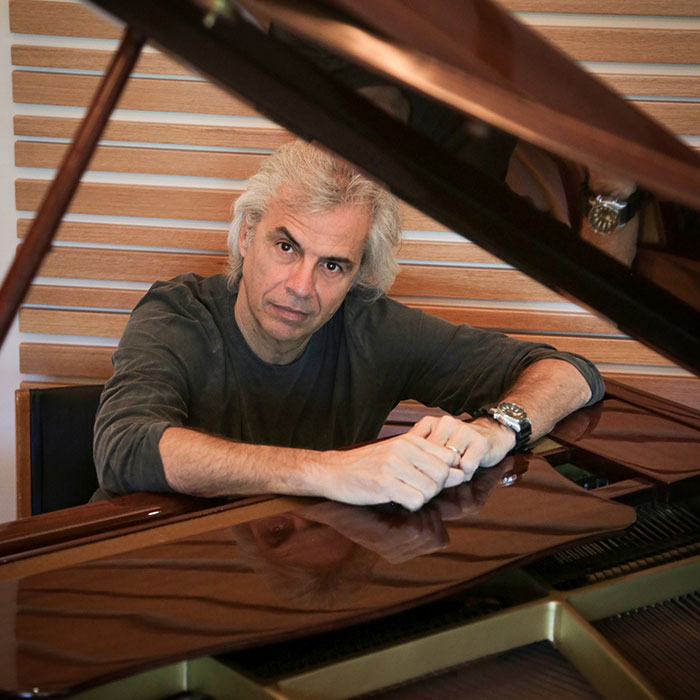
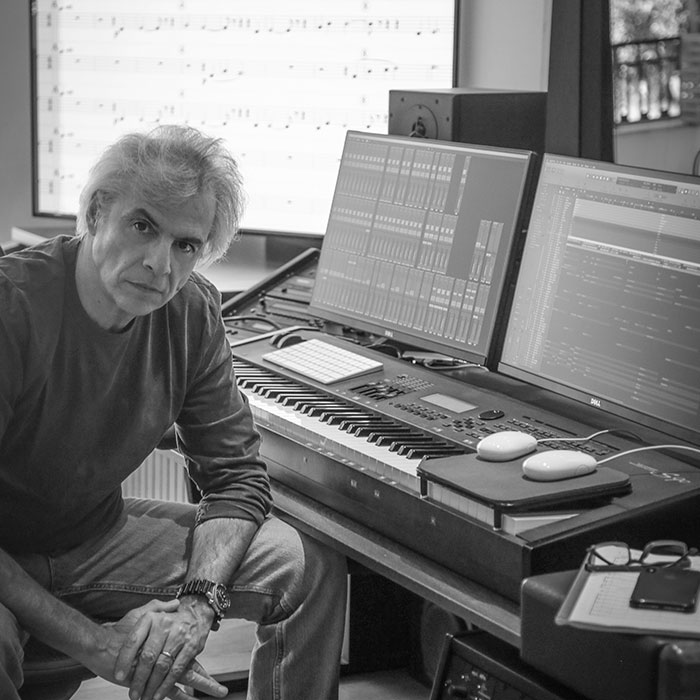
Stefano Mainetti and love for music.
I don’t come from a family of musicians. At the beginning, when I was a child studying classical guitar, my parents were very happy with this choice. When they began to understand that I wanted to make music into a profession, things got a little complicated. I had to continue classical studies and the University parallel to the Conservatory, both finishing late, also because I started working very early; at twenty I taught music to the magistrals and in the evening I played in clubs. Just this nocturnal attendance gave me the opportunity to get closer to the world of film productions and slowly, from writing music for documentaries I moved on to soundtracks for cinema, theater and television. I was fortunate to have chosen this work when 400 films were produced every year in Italy and for a period I also wrote more than ten soundtracks in one season. This cannot be said for today’s children who see this profession increasingly reduced to the bone; the productions are much less and also the attention to the soundtrack has definitely lost positions, not only from an economic point of view. This was the main reason why in 2017 together with a pool of Italian composers we founded the ACMF, the Associazione Compositori Musica per Film, which deals with re-evaluating all the artistic and non-artistic aspects of this category, which has given history a lot of the show not only Italian. Finally, never ask a composer which is his favorite composition, because it is a bit like asking a child if he loves mom or dad more; the composition I care about most is always the last, and it is a reason to go on hoping to do better and to always learn something new.